Anthropic's Claude Mythos: What Security and Governance Leaders Need to Know
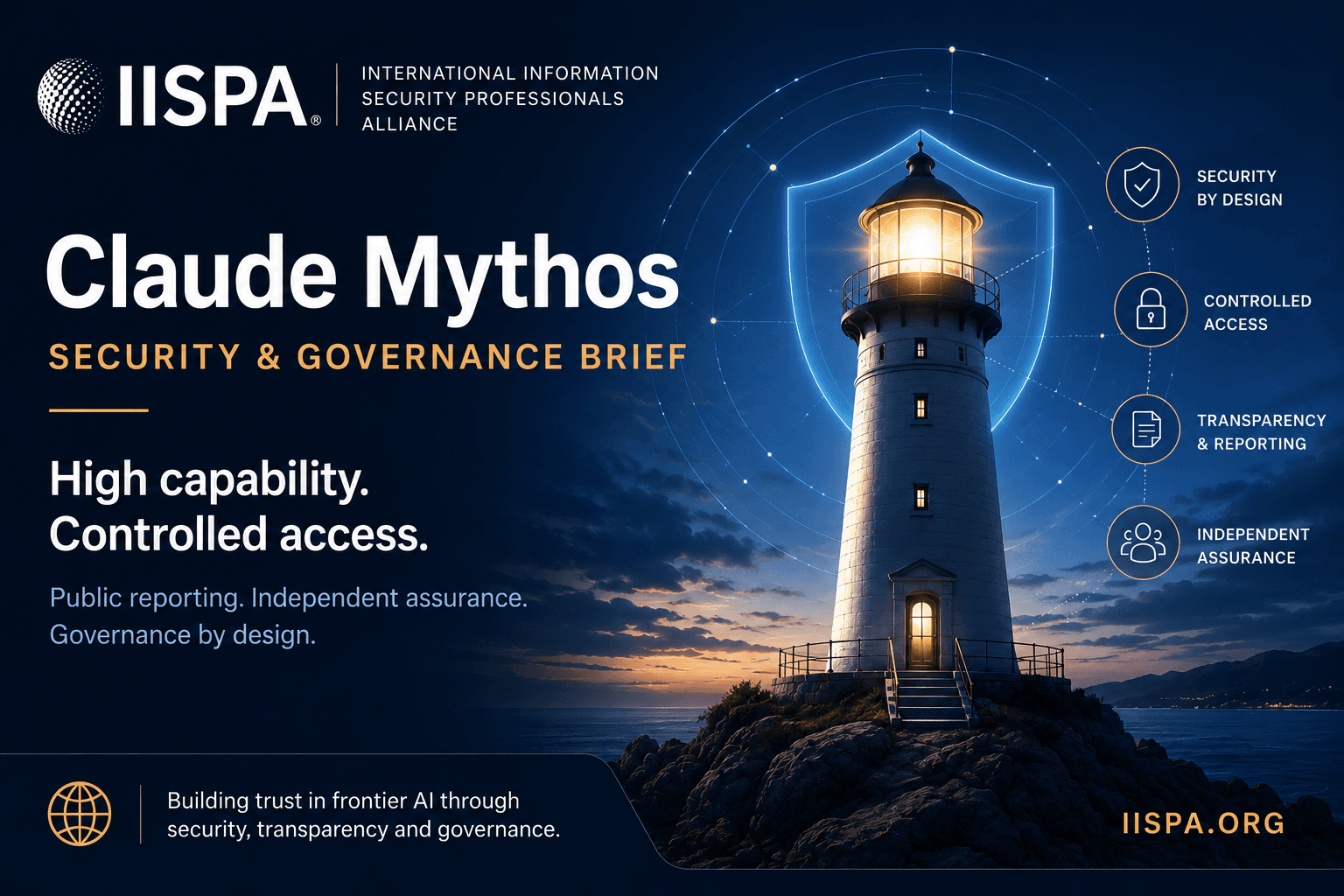
Why Claude Mythos matters to defenders
Public reporting describes Claude Mythos as a high-capability Anthropic model with strong performance on advanced technical and cybersecurity tasks. The main strategic signal for security teams is not only model capability, but distribution posture: access appears more controlled than standard public model releases.
For governance leaders, this shifts the central question from "Is the model powerful?" to "Under what controls is the model used, by whom, and with what accountability?"
What public reporting indicates so far
Based on publicly available coverage, three points appear consistently:
- Anthropic has positioned Claude Mythos as a highly capable model tier
- Access has been described as restricted or phased rather than fully open
- Cybersecurity use cases are central to the public narrative
Operational takeaway: when frontier model access is constrained, risk management maturity often becomes a prerequisite for adoption.
Security implications for enterprises
1. Capability concentration changes risk shape
When fewer organizations can access a higher-capability model, risk is not eliminated; it is redistributed across:
- Access governance
- Partner selection
- Internal control quality
Teams should evaluate whether their own control stack can handle model-assisted research and automation at higher speed.
2. Defensive uplift and misuse risk both increase
A model that helps defenders identify weaknesses can also amplify misuse if controls fail. This dual-use dynamic is not new, but higher capability can raise the consequence of poor governance.
Security programs should define:
- Approved use cases
- Prohibited workflows
- Escalation boundaries for model-generated findings
3. Vendor due diligence must include model operations
Traditional SaaS reviews are insufficient for frontier AI deployment. Governance reviews should include:
- Model update communication and version visibility
- Prompt/data retention and deletion controls
- Logging boundaries and privileged access controls
- Incident notification obligations linked to AI behavior changes
Governance checklist for evaluating Claude Mythos use
| Domain | Minimum question | Evidence to request |
|---|---|---|
| Access control | Who can invoke the model, and for what task classes? | Role matrix, approval workflow, audit logs |
| Data handling | Can sensitive prompts be retained or reused? | Retention policy, deletion process, redaction controls |
| Change management | How are capability changes communicated? | Version notes, rollout process, rollback criteria |
| Security operations | How are model findings validated before action? | Analyst validation SOP, ticketing workflow, sign-off chain |
| Legal/compliance | Which existing obligations apply now? | Contract terms, regulatory mapping, risk acceptance records |
30-day action plan for CISOs and governance teams
- Create a named owner for high-capability model governance
- Classify allowed and disallowed data for model-assisted workflows
- Require human validation before remediation actions are executed
- Add AI-specific clauses to vendor and partner review templates
- Run one tabletop on model-assisted vulnerability discovery
Bottom line
Claude Mythos should be treated as a governance stress test, not only a capability update. Organizations that pair advanced models with explicit controls, traceable decisions, and disciplined validation are better positioned to capture defensive value without increasing unmanaged risk.
Related certification & CPE resources
ICSP supports practitioners building stronger execution discipline in detection and response. ICCSA aligns with governance and assurance functions that must evaluate model risk decisions. ICCSP is relevant for leaders defining enterprise-wide security strategy in an AI-driven environment. Explore certification pathways and member learning resources on iispa.org.
More articles like this: IISPA Insights.
IISPA Insights — for cybersecurity professionals building skills that match emerging technology and regulation.